



Some hazards on trips and some tips to deal with them.
Flash Flooding
- Slot canyons flash flood nearly every storm. They have caused many deaths in Blue Mountains Canyons and around the world. Do not take the risk of canyoning in rain.
- You must always check the forecast and note previous weather. If it has been raining in the prior hours/days, the catchment may be saturated and it takes even less rain to cause a flood.
- Any forecast of more than a couple mm would make it inadvisable to do a wet canyon. Definitely do not do any committing canyon. If there are any storms forecast you should not do any wet canyon and probably not a dry one either.
- When canyoning always note high points and escape points in a canyon to use if the water starts rising. There are reports of canyon water rising several meters in less than an hour (in storms that are not even that rare, occurring more than once a year)
- If caught in a flash flood try note how quick water is rising and if you can get to a known exit. Otherwise get to high points or spots out of the main flow.
Cold/Hypothermia
- Canyons are cold and dark with frigid water. This can sap people of heat.
- Make sure everyone has emergency dry clothes with them.
- Ask people to tell you when they’re getting cold as well as watch them yourself.
- If someone is getting cold, try to keep them moving, not wait so long for abseils, stand in the sun etc. Giving them a rain jacket can help insulate them and giving them snacks and sugar helps.
Abseiling
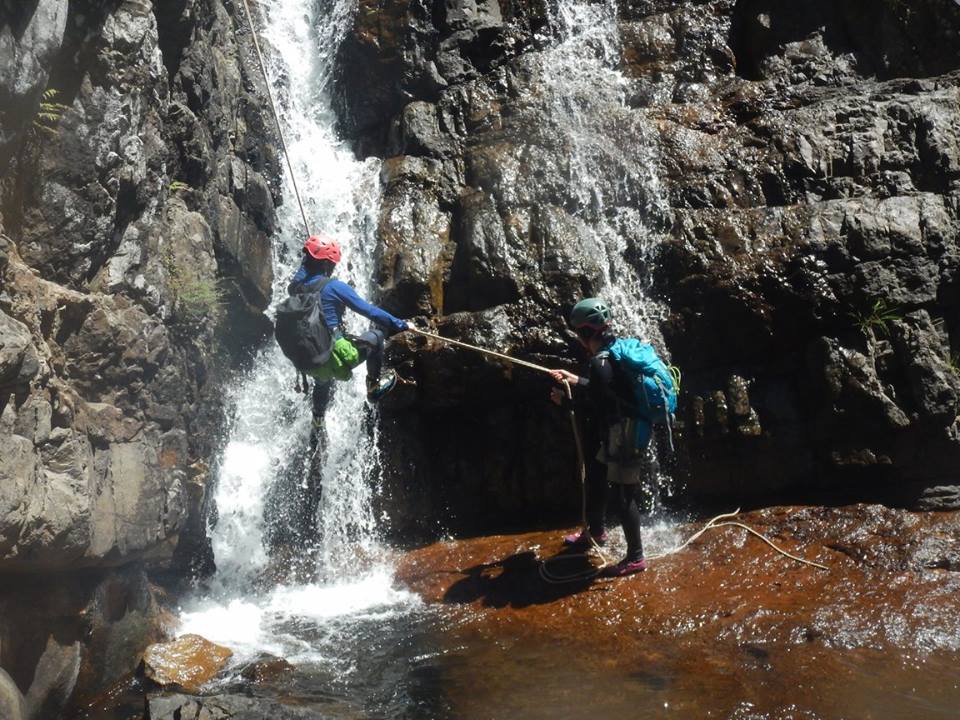
- Have safeties to clip to people. Don’t let them anywhere near the edge without it.
- Set people up on abseil correctly and double-check it. Have them weight the system before taking safety off.
- Talk them through the abseil techniques mentioned in the briefing above.
- Always fireman’s belay or top belay. Fireman’s belay is easier and quicker, but if the abseil is quite long, has dangerous ledges, or the belayer’s vision is impeded, then top belay is better.
- Be weary of edge wear on ropes. Use rope protectors.
- Read some great safety articles from UNSWOC trip leaders:
- Intro to Abseiling by Maria
- Edge Wear of Ropes by Brendan
- Safer Abseiling and Safer Abseiling Instruction by Sam
Drowning/Cramps
- If someone can't swim they shouldn't be in a canyon with swims. This would be in you trip description and morning check.
- People can cramp up or grow tired while swimming and sink. Especially on longer days and in the very cold water.
- Hence make sure everyone has a dry bag (to float) or swim near those who do not.
- Look out for less confident, cold or drybag-less swimmers when swimming.
Fall From Height, Slips, Trips and Falls
- Advise people to move slowly and carefully and be aware of and try stay away from drops and edges. If you are near a drop get low or even lie down so you can’t trip and fall off. Try let them know where there are dangerous drops and slippy areas
- Move slowly using hands and feet and getting down on your bum when safer.
- Sprained/broken ankles as well as lacerations are common. Have first aid kit (and know how to use it) and PLB.
Hitting Submerged Debris
- Never jump without checking the water for rocks and logs. Someone should climb or abseil down and swim underwater to check. Even if you did a canyon recently a storm could have washed in debris.
- Always point to safety (where is safe to jump to) not to where danger is. As people may not hear what you’re saying
- Even though someone’s checked the pool already and it should be safe, use hand signals after jumping:
- Hand swipe over top of your helmet without touching helmet – Didn’t touch ground/debris, safe to jump
- Tap top of helmet – touched but ok to jump, be wary, bend legs
- Frantic waving crossing hands (or you’re injured and clutching your legs) – Don’t jump! Someone did not check all of pool or wide/deep enough area. Should’ve abseiled/climbed down.
Snake Bite
- Make sure you have snakebite bandages and a registered PLB to set off. These can all borrowed from the club. Read St John’s first aid advice on what to do.
Waterfalls/Rough Water (in more advanced, definitely not beginner friendly canyons)
- Always try avoid being in rushing water/waterfalls as they are very powerful and can wash you away or freeze you to death.
- Always try set up abseils away from waterfalls. If forced to abseil through, instead of next to, a waterfall:
- Be very sure your ropes make it to the ground and aren't tangled.
- Know you can switch to ascent quickly, preferably with ascenders not tricky, slow, catchy prusiks.
- Keep your head down to breathe and try move fast.
- Single rope technique (SRT) should be used.
- Rig for rescue (i.e. the anchor should be rigged so that it is able to be released and the rope lowered if someone is stuck on rope. It may well be impossible to ascend if in any significant water flow).